The historic 2026 midterm elections have led many to reflect on the state of our nation and how we can move forward under this new leadership of the "blue wave," the popular catchphrase used to describe Democrats regaining control of the Senate and House of Representatives. A record 17 female governors were elected by voters, and I thought about how far female politicians have come since 1992, which was declared the "Year of the Woman" because so many female candidates ran for office. Carol Moseley Braun etched her name in Black history as the first African American woman elected to the U.S. Senate, representing Illinois. Dianne Feinstein and Barbara Boxer also became trailblazers for California, making it the first state to be represented by two female senators. Looking at my home state of Georgia after the 2026 midterm races, so many people that I grew up with were overjoyed that Keisha Lance Bottoms became not only the first female and first Black governor of the state but also our country's first Black woman governor. Bottoms is joined by Penny Brown Reynolds, Georgia's first Black woman elected secretary of state; Tanya Miller, Georgia's first Black female attorney general, and Nikki Porcher, Georgia's first Black female commissioner of labor. Before Reynolds' election, Robyn A. Crittenden also made history in 2018 when then-Georgia Gov. Nathan Deal appointed her secretary of state to succeed Brian Kemp, who resigned to run for governor the following year. Crittenden was Georgia's first Black woman serving as a statewide constitutional officer.
In Georgia's rich civil rights history, the elections of Bottoms, Reynolds, Miller and Porcher are defining milestones. But another full-circle moment also came on Nov. 3, when Dr. Martin Luther King Jr.'s granddaughter, Yolanda Renee King, voted in her first election. Yolanda, who is a freshman studying political science at Columbia University, was accompanied by her parents, Martin Luther King III and Arndrea Waters King, when she returned home to Atlanta to cast her vote. Yolanda has boldly embraced her family's activist legacy, giving her first speech at just 9 years old at the 2018 March for Our Lives anti-gun rally in Washington, D.C. Since then, she has authored a children's book titled "We Dream a World" about her paternal grandparents and spoken on issues of poverty and homelessness, racism and voting rights. When asked about how she felt casting her ballot for the first time, Yolanda explained that her parents taught her about voting at a young age and took her to the polls, and I'm sure that she thoroughly knows the history of the 1965 Voting Rights Act and how her grandfather led two of the Selma-to-Montgomery marches to challenge Black voter suppression in the South. As I was watching video clips of Yolanda speaking about her first-time vote, I went back to read part of her grandfather's 1957 keynote address during the Prayer Pilgrimage for Freedom, held at the steps of the Lincoln Memorial. This speech was titled "Give Us the Ballot — We Will Transform the South." In a passionate plea to both political parties for justice, King implores, "Give us the ballot, and we will no longer have to worry the federal government about our basic rights ...
"Give us the ballot, and we will fill our legislative halls with men of goodwill and send to the sacred halls of Congress men who will not sign a 'Southern Manifesto' because of their devotion to the manifesto of justice. ... Give us the ballot, and we will place judges on the benches of the South who will do justly and love mercy, and we will place at the head of the southern states governors who will, who have felt not only the tang of the human, but the glow of the Divine."
I think many voters in Georgia felt that Bottoms, Reynolds, Miller and Porcher understood what King refers to as the "tang of the human," which means leaders having empathy for human suffering and being able to relate to the lived experiences of others. Regarding the "glow of the Divine," I paused to reflect on one of King's most passionate visions, the Beloved Community, which he expanded from 20th-century theologian Josiah Royce. King's Beloved Community is grounded in the Godly principle of agape love, where all people feel self-worth and have the opportunity to prosper. It centers on Christ's redemptive work, where people set aside hatred for their enemies and strive to build each other up. As all our newly elected leaders prepare to take office next year, we should pray that they embrace this vision of governing with compassion and humility.
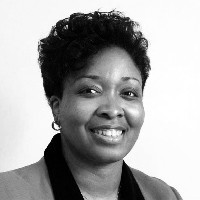
Dr. Jessica A. Johnson is a lecturer in the English department at Ohio State University's Lima campus. Email her at smojc.jj@gmail.com. Follow her on X: @JjSmojc. To find out more about Jessica Johnson and read features by other Creators Syndicate writers and cartoonists, visit the Creators Syndicate website at www.creators.com.
Photo credit: Element5 Digital at Unsplash






View Comments